
Overall Risk Outlook—Reason for Concern
We maintain our “neutral with reason for concern” outlook on spread-sector risk. Spreads across many sectors are at or near 20-year lows, leading us to believe that favorable outcomes for the economy have been largely factored in. In our view, this has left an asymmetrical risk proposition where the potential downside of widening spreads outweighs the alternative. This does not mean we are not invested in spread products. Despite tight spreads, there are opportunities to pick up returns from carry positions in shorter-maturity, higher-quality assets. By managing our exposure to spread movements, we strive to limit the downside of any material spread widening. Geopolitical risk, either in the form of increased tensions in the world or the US elections, is still an overhang to fixed income spread sectors. Despite this cautious stance, we are finding sectors and areas on the yield curve that provide attractive income with more limited exposure to spread widening.
As of June 30, 2024
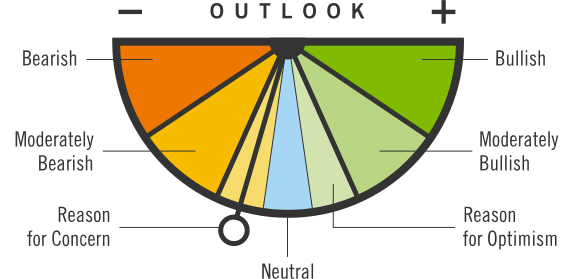
Arrows represent any change since the last quarter-end.
The sector settings reflect our six-to-twelve month outlook on each asset class.
Sector Breakdown
Expand the sectors for individualized breakdowns.
Neutral
At current UST yields, we are not inclined to move away from our neutral stance. The Fed has welcomed the more recent data on inflation and job activity in the United States, but as was shown in the first quarter, these measures can easily turn the other way. The US economy has been growing beyond potential for some time, arguing for a higher-for-longer monetary stance. However, there is growing space for the Fed to cut rates as the end of the year approaches. In our view, the Fed’s cutting cycle will be shorter and shallower than the market is currently pricing in. This, and ever-increasing fiscal deficits that will need increased UST issuance, should cause the 10-year UST yield to trend higher over time, in our view. The prospect of Fed rate cuts may keep intermediate yields lower than financial conditions warrant. We do not foresee, absent a market shock, yields breaking out much higher over the near term, but we feel intermediate and longer yields will trend up toward the end of the year. As such, we are looking to take opportunities to be more tactical in our duration exposure as yields move. We remain disciplined in how we allocate to the different parts of the yield curve and look for increased carry and roll-down opportunities.

Moderately Bullish
TIPS still provide value against inflation surprises as break-even inflation rates have fallen.

Moderately Bullish
In June, the ECB embarked on what we believe will be a gradual and controlled easing cycle. A benign inflation backdrop allowed policymakers to cut rates, while positive economic growth momentum means that policy does not have to become accommodative too fast. Consumer confidence has been on the rise, helped by lower headline inflation and still-elevated wage growth. The savings rate remains at pre-pandemic levels, and as it comes down, this should further support private consumption going forward. Meanwhile, price pressures continue to moderate, even though we expect some volatility for wage-sensitive items. Considering this, we anticipate two more 25-basis point cuts this year (in September and December). In the meantime, since the ECB emphasized its data-dependence, bond markets will likely react to new data as it is reported. Consequently, we will watch for tactical opportunities and believe that, over the medium to longer term, declining yields should provide a tailwind for European government bonds.
Bearish
The Bank of Japan has been slow to respond to inflation concerns. Yields will have to trend higher to reduce the rate differentials with other developed countries.

Reason for Optimism
We do not expect an increase in involuntary prepayments as mortgage credit statistics remain robust, borrowers have locked in home price appreciation, and macroeconomic conditions remain relatively healthy

Neutral
The accumulation of home equity, a tight labor market, enhanced payment relief measures and forbearance policies should be supportive of stable mortgage credit performance in the near term.
Reason for Concern
We expect the concerns over underlying fundamentals to contribute to heightened spread volatility. A deterioration in macroeconomic conditions or headline risk sentiment could lead to wider spreads.

Neutral
Low unemployment, growing real wages and relatively low leverage should continue to underpin consumer credit performance.
Reason for Concern
A shifting market risk environment in early 2024 has shaped US IG corporate bond returns. Rising inflation altered Fed policy expectations, resulting in higher market yields that helped drive demand for the asset class. However, credit spreads tightened to well below long-term averages and now offer little buffer against economic, financial or geopolitical surprises. On the positive side, our internal US macroeconomic outlook suggests an economic soft landing is the base-case scenario, and most IG issuers have significant financial flexibility to manage through changing economic conditions. Market technical conditions should also remain supportive. Despite this outlook, we continue to have concerns about valuations, changing central-bank policies, a possible shift downward in credit fundamentals, and increasing geopolitical risks. In our view, while investment-grade spreads continue to offer attractive yields, tight valuations mean credit spreads may be biased to move wider as the year progresses.
Reason for Optimism
Attractive carry should compensate for slightly expensive spreads.
Reason for Optimism
Amid a generally supportive fundamental and technical backdrop, we continue to advocate a focus on quality companies, industry positioning and financial liquidity
Reason for Concern
European HY spreads are tight but can remain at current tight levels for a number of quarters. As such, we are increasing exposure to high-conviction trades as carry is attractive versus cash balances.
Reason for Optimism
Although higher rates combined with a constructive macroeconomic outlook should continue to keep investors interested in bank loans, we must employ diligent loan selection in the current bifurcated environment

Neutral
Despite improved CLO credit fundamentals, if interest rates remain higher for longer, lower-rated loan issuers may face pressure, resulting in increasing downgrades and defaults.

Moderately Bullish
Historically elevated yields and stable credit fundamentals continue to attract investor interest. A sustained pickup in demand should be supportive for muni bonds going forward.
Reason for Optimism
Solid EM credit fundamentals and reduced sovereign default risk in 2024 should support EM spreads in the near term, but we expect volatility to increase as the US election approaches.
Neutral
In this market, we think carefully about downside risk, correlations and liquidity; however, when incorporated into portfolios, EM corporates can create a high-carry, low-duration portfolio that we think may outperform in the medium to long term.
Moderately Bearish
We continue to have a preference for higher-quality credits that have financial buffers to manage slowing economic activity.
